
INDUSTRIAL AUTOMATION
INDUSTRIAL AUTOMATION
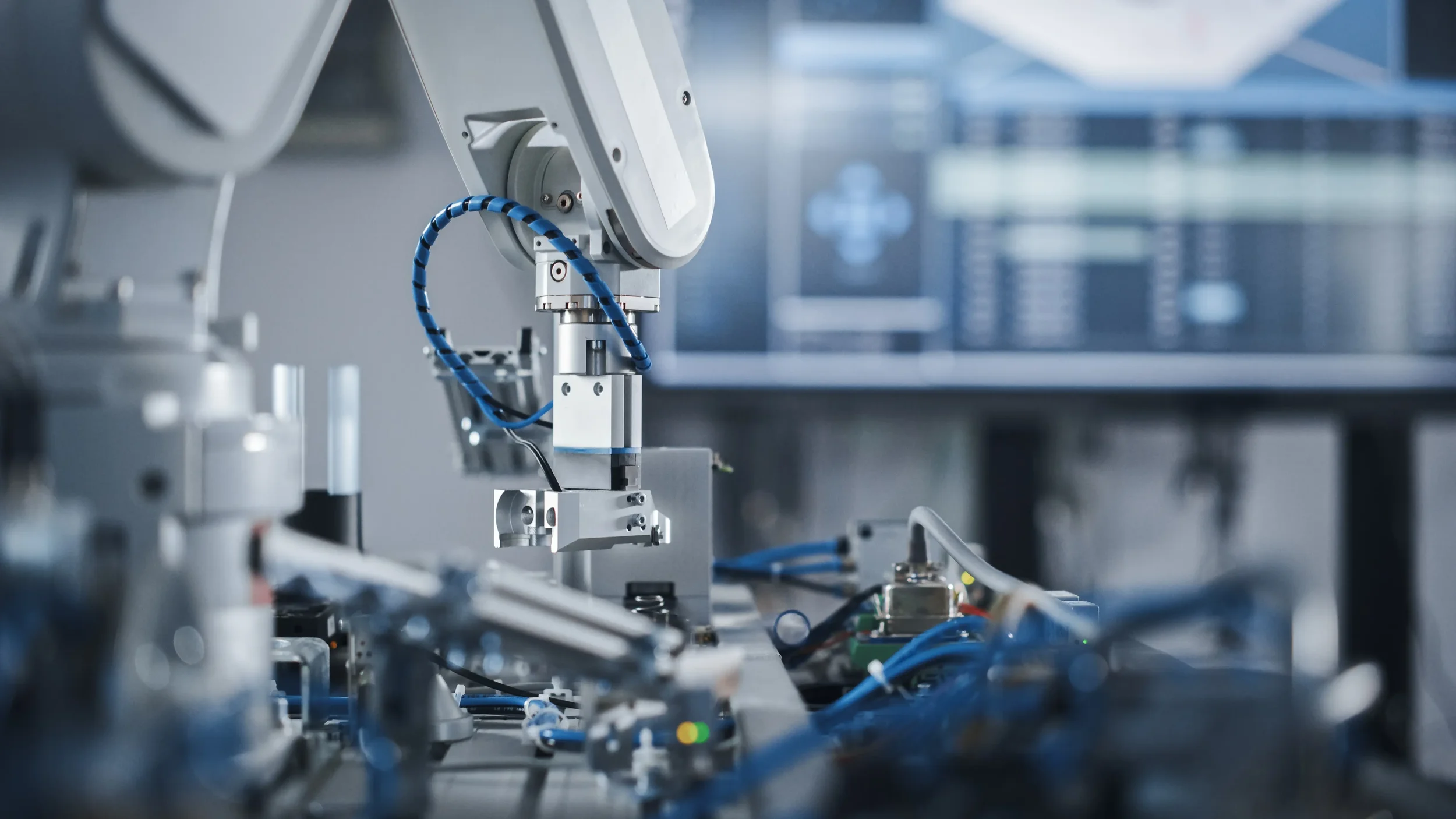
With decades of experience designing and delivering industrial automation solutions, ISD helps manufacturers improve productivity, increase reliability, and reduce operational costs. We work closely with your team to understand your processes, identify opportunities, and develop solutions that align with your operational goals, budget, and long-term growth strategy. From initial concept and system design through fabrication, integration, installation and commissioning, we manage every stage of the project with a focus on quality, communication, and successful execution.
Every project is unique. While most automation projects follow a similar lifecycle, the scope, complexity, and customer requirements determine which phases are necessary. Some projects may move quickly through certain stages, while others require additional engineering, testing, or validation to ensure a successful outcome.
What to Expect
1. Evaluation
Initial Consultation & Pre-Project Evaluation
2. Concept
3. Design
The first phase is focused on understanding the process, product, operational challenge, and desired outcome. ISD gathers enough information to evaluate the opportunity, identify major technical considerations, and determine whether automation is a practical fit. This phase is typically completed remotely and provides the foundation for an informed preliminary estimate.
Key activities may include:
Defining objectives, pain points, and success criteria
Reviewing the existing process and equipment
Evaluating products, materials, cycle times, and throughput needs
Benchmarking the current manual process, when required
Identifying major facility, integration, and safety constraints
4. Manufacturing
5. Install
2. Conceptualization & Quoting
Once the initial opportunity is understood, ISD develops a preliminary solution approach and prepares a Rough Order of Magnitude, or ROM, estimate. If the ROM aligns with the customer’s expectations, the project advances into deeper discovery and firm concept development. This may include site visits, detailed measurements, stakeholder input, and the additional technical work needed to produce a firm proposal and Statement of Work.
Key activities may include:
Developing preliminary concepts and solution alternatives
Preparing a budgetary ROM for cost and lead-time alignment
Conducting site visits and detailed process reviews, when required
Defining performance requirements and acceptance criteria
Resolving major technical assumptions and project boundaries
Issuing a firm proposal, Statement of Work, and commercial terms
3. Design & Engineering
After the project is awarded, the approved concept is developed into a complete mechanical, electrical, controls, and safety-integrated design. Mechanical engineering typically establishes the equipment architecture first, while controls and electrical systems are added as the design matures. Reviews are conducted throughout the process to verify performance, manufacturability, maintainability, and alignment with the agreed scope.
Key activities may include:
Component, tooling, actuator, motor, and sensor selection
Electrical schematics, control-panel design, and system architecture
PLC, HMI, robotics, vision, and motion-control planning
Machine-safety assessment and internal safety approval
Customer design reviews and final release for manufacturing
4. Manufacturing & Assembly
Once the design is released, the project moves into procurement, fabrication, machining, panel construction, assembly, programming, and system integration. The completed equipment is powered up and debugged as a complete system, using representative customer products or materials whenever practical. For new equipment, this phase typically concludes with a Factory Acceptance Test before shipment.
Key activities may include:
Procurement of standard and long-lead components
Mechanical and electrical assembly
PLC, HMI, motion, robot, and vision programming
System integration, debugging, and performance optimization
Factory Acceptance Testing and shipment approval
5. Installation, Training and Post Go-Live Support
5. Installation, Training and Post Go-Live Support
Following successful factory testing, the equipment is shipped to the customer’s facility for installation, commissioning, and final integration. ISD supports system startup under actual production conditions and may perform a Site Acceptance Test based on the agreed project requirements. Training, documentation, and post-go-live support are tailored to the equipment’s complexity, operational importance, and the customer’s internal capabilities.
Key activities may include:
Equipment delivery, placement, installation, and utility connection
Integration with surrounding equipment and plant systems
Commissioning, production trials, and Site Acceptance Testing
Operator and maintenance training
Final documentation, software backups, and spare-parts guidance